

Searching for how to register for NDIS usually means one of two very different things. If you or someone you care for has a disability, it means applying to become an NDIS participant — the process that unlocks funded supports. If you run a disability service business, it can mean something else entirely: becoming a registered NDIS provider. Both processes involve government forms, evidence, and a wait for a decision, and it's easy to land on the wrong guide. This article walks through the participant pathway in full — eligibility, the Access Request Form, and what happens after you apply — then covers the provider registration process separately, so you can find the steps that actually apply to you.
To register for the NDIS as an individual means submitting an Access Request Form to the National Disability Insurance Agency (NDIA) to become an NDIS participant, after which the NDIA assesses whether you meet the age, residency and disability requirements. This is different from NDIS provider registration, which is a separate process for organisations that want to deliver NDIS-funded supports.
Most people typing this phrase are asking about the first meaning: becoming a participant. That's the focus of the next several sections. If you're a business owner asking about the second meaning, skip ahead to the provider registration section below.
To be eligible for the NDIS, you must be under 65 years old when you apply, live in Australia as an Australian citizen, permanent resident or Protected Special Category Visa holder, and have a permanent disability or a need for early intervention that significantly affects your everyday functioning. All three requirements must be met on the day the NDIA receives your complete application.
| Requirement | What It Means |
|---|---|
| Age | Aged 0–64 years at the time of application. Children under 9 are generally supported through the early childhood approach rather than a standard access request. |
| Residency | Australian citizen, permanent resident, or Protected Special Category Visa holder, currently living in Australia. |
| Disability requirement | A permanent (or likely permanent) impairment that substantially reduces your functional capacity in everyday activities and creates an ongoing need for support. |
| Early intervention requirement | An alternative pathway for people whose current need for support could be reduced through early, targeted intervention — this can apply instead of, or alongside, the disability requirement. |
NDIS eligibility is not means-tested — your income, savings or Centrelink payments have no bearing on whether you qualify. What matters is how your disability affects your day-to-day functioning and future support needs.
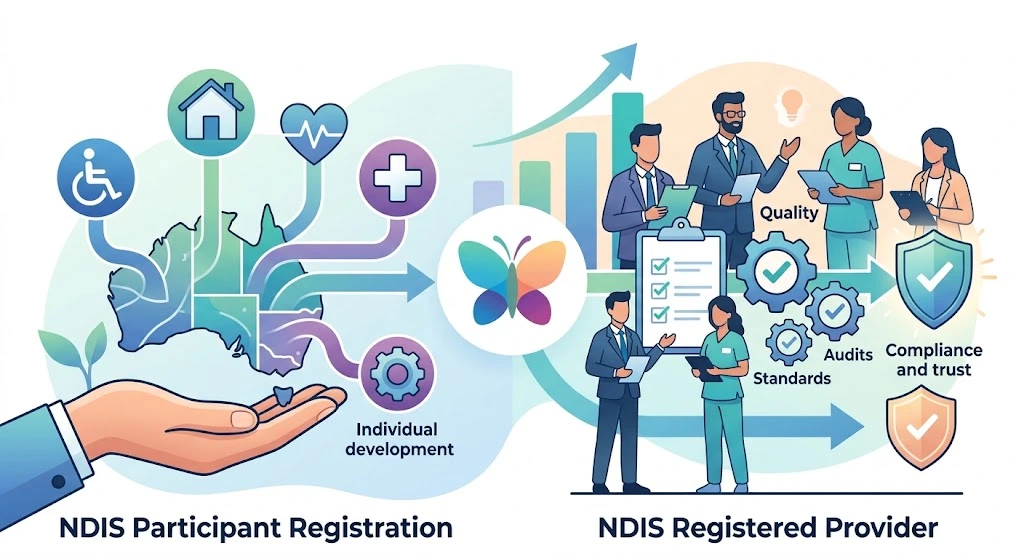
To register for the NDIS, contact an NDIS partner or Local Area Coordinator in your area, complete the Access Request Form with your personal and residency details, gather supporting evidence of your disability from a treating health professional, and submit the form by email, post, in person, or through your local partner.
The form itself is usually the fast part. Gathering strong medical and functional evidence is where most delays happen — some specialists take weeks to write a report, and reports aren't always covered by Medicare, so budget time and possibly cost into your planning.
Once the NDIA receives your complete Access Request Form and supporting evidence, they assess it against the eligibility requirements and aim to notify you of a decision within 21 days. If approved, you become an NDIS participant and move to a planning meeting to build your first plan; if the NDIA needs more information, they'll write to request it.
Three outcomes are possible:
The NDIA aims to make an eligibility decision within 21 days once your access request and all supporting evidence have been submitted. The bigger variable is how long it takes to gather strong medical and functional evidence beforehand, which can add weeks depending on specialist appointment availability.
If your application is incomplete, or the NDIA requests more evidence, the clock effectively resets around that follow-up — so it pays to have your evidence as thorough as possible before you submit, rather than relying on the NDIA to ask for what's missing.
If you don't meet the NDIS eligibility requirements, you can request a review of the decision, and in the meantime an NDIS partner or Local Area Coordinator can connect you with mainstream services (health, education, employment) and community supports outside the scheme.
Not being eligible for the NDIS doesn't mean no support is available — LACs specifically help people who aren't eligible find services through mainstream systems and local community organisations.
To become a registered NDIS provider, your organisation applies through the NDIS Quality and Safeguards Commission Applications Portal, completes a self-assessment against the relevant NDIS Practice Standards, and passes an independent audit (verification or certification, depending on the supports you deliver) before the Commission approves registration. The process commonly takes several months from application to certificate.
This is a different journey to participant access, aimed at organisations that want to deliver supports to NDIA-managed participants, or that fall under categories where registration is mandatory — including supported independent living and NDIS digital platform providers from 1 July 2026.
Registration itself carries no application fee, but audits, worker screening and insurance are real costs, and the audit is usually the largest single expense in the process.
Once registered, ongoing compliance is the real workload: tracking credential expiries, keeping an audit-ready evidence trail, and being able to show an auditor exactly how your organisation meets each Practice Standard. That's the gap NDIS compliance software is built to close — turning scattered policies and spreadsheets into a system your auditor can actually follow.
Providers registering for the first time, and still working out which systems they need before day one, may also find our guide to NDIS software for small providers useful — it covers what to put in place early rather than retrofitting compliance after your first audit.
Whatever stage you're at, our compliance and audit trail tools are built specifically around the NDIS Practice Standards that registration is assessed against.
It's the official form used to apply to become an NDIS participant. It has a section you complete yourself and a section your treating health professional completes about your disability or support needs.
You must be aged 0–64, live in Australia as a citizen, permanent resident or Protected Special Category Visa holder, and have a permanent disability or a need for early intervention that affects your daily functioning.
Contact a Local Area Coordinator or early childhood partner first — they can advise what evidence is needed and, for young children, the early childhood approach doesn't always require a formal diagnosis before support starts.
The NDIA aims to decide within 21 days of receiving a complete application, though gathering medical evidence beforehand can take several weeks depending on specialist availability.
No. Applying to become an NDIS participant is free. You may have out-of-pocket costs for specialist reports not covered by Medicare.
You become an NDIS participant and are invited to a planning meeting, where your funded supports and goals are discussed and your first plan is built.
Yes. You can request a review of an access decision, and an NDIS partner can help connect you with non-NDIS supports in the meantime.
Registering for the NDIS means applying as an individual to receive funded supports. Becoming an NDIS registered provider is a separate process for organisations that want to deliver those supports, involving an application, self-assessment and independent audit through the NDIS Commission.
Provider registration commonly takes several months from application to certificate, depending on how quickly policies and evidence are ready and how long the audit process takes.
Not always — unregistered providers can deliver services to self-managed and plan-managed participants. Registration is required to support NDIA-managed participants, and is becoming mandatory for specific service types such as supported independent living and NDIS digital platforms from 1 July 2026.
Registering for the NDIS as a participant comes down to meeting three requirements and putting together solid evidence before you submit — the form itself is the easy part. Becoming a registered NDIS provider is a longer, more involved process, but it opens the door to NDIA-managed participants and higher-risk supports.
If your organisation is heading down the provider path, book a demo of Ausvanta to see how audit-ready compliance tracking, rostering and worker screening fit together from day one of registration.
Start your free 14-day trial — unlimited users, no credit card required.